I'm running a free sale on the first book in my trilogy today (and tomorrow for anyone that's interested) and it got me thinking, what is a book worth?
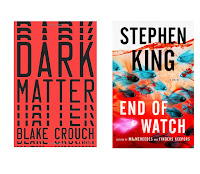
I was looking at the latest Black Crouch novel, Dark Matter, which is priced at $12.49 and noticed that his Wayward Pines novels were priced at $5.99. Crouch's Dark Matter is higher in the Amazon charts than Stephen King's, End of Watch (which I'm reading right now and so far not overly impressed - but I'm not a Stephen King junky so my views don't mean much). Watch sells for $14.99. It's also worth nothing that King's past works sell for $9.99 on average.
Now, I'm new on the scene so I'm happy just to get my work into people's hands any which way. My free sale was great today with over 300 people downloading the book at the time of writing this. It's normally $3.99 and the other two in the trilogy are $5.99 (lucky for me readers seem okay with that, as sales are starting to come in). In the self-publishing world $2.99 is a standard price, with many authors selling for .99c or even making their books perma-free.
But just what the heck is a book really worth?
The simple answer is "Whatever the market will pay at any given time.". But that's a bit of a moving target in my view.
I mean, it would seem to me that a book's value is tied far more to an author's reputation in the market. And that reputation is determined by the degree to which readers believe (from past experience or through marketing hype or both) that they will get a product they enjoy.
So author reputation (and past works) mitigates risk aversions in buyers and can thereby command a higher price. Which explains why Crouch has to take a back seat to King in pricing.
But all that tells us is what a book can sell for, but is that what it's worth? The two are not the same thing to me.
 I think we can never know what a book is worth. We just can't, because a book is never judged solely on its own merits. There are bad books with good covers that sell for more than they should. There are good books with bad covers that sell for far less than they should. There are mediocre books that sell at a premium simply because an author's past book was good (the quality of the present work is irrelevant to its worth).
So while the selling price of a book can probably be factorially assessed and pinned down, it's true worth can never be known for that very reason. So many things go into the worth of a book which are extraneous to the actual story and writing, that it's impossible to know what it's really worth.
And that doesn't even factor in personal taste. To me, the Stoic Philosophy of Seneca is one of the best books ever written, yet most people have never heard of it.
In a way, it's sad, because the art of writing has been consumed by capitalistic market forces (perhaps this is how it has always been). The cream doesn't necessarily rise to the top. The publishing market is an unlit room where readers reach into the darkness and hope they get their money's worth. Sometimes they make out like a bandit, other times they get taken to the cleaners.
What's free today can be $14.99 tomorrow. And what's $14.99 today, could one day be free. And none of it is necessarily reflective of what a book is actually worth.
That's just the crazy world of publishing I guess.
I was looking at the latest Black Crouch novel, Dark Matter, which is priced at $12.49 and noticed that his Wayward Pines novels were priced at $5.99. Crouch's Dark Matter is higher in the Amazon charts than Stephen King's, End of Watch (which I'm reading right now and so far not overly impressed - but I'm not a Stephen King junky so my views don't mean much). Watch sells for $14.99. It's also worth nothing that King's past works sell for $9.99 on average.

Now, I'm new on the scene so I'm happy just to get my work into people's hands any which way. My free sale was great today with over 300 people downloading the book at the time of writing this. It's normally $3.99 and the other two in the trilogy are $5.99 (lucky for me readers seem okay with that, as sales are starting to come in). In the self-publishing world $2.99 is a standard price, with many authors selling for .99c or even making their books perma-free.
But just what the heck is a book really worth?
The simple answer is "Whatever the market will pay at any given time.". But that's a bit of a moving target in my view.
I mean, it would seem to me that a book's value is tied far more to an author's reputation in the market. And that reputation is determined by the degree to which readers believe (from past experience or through marketing hype or both) that they will get a product they enjoy.
So author reputation (and past works) mitigates risk aversions in buyers and can thereby command a higher price. Which explains why Crouch has to take a back seat to King in pricing.
But all that tells us is what a book can sell for, but is that what it's worth? The two are not the same thing to me.

So while the selling price of a book can probably be factorially assessed and pinned down, it's true worth can never be known for that very reason. So many things go into the worth of a book which are extraneous to the actual story and writing, that it's impossible to know what it's really worth.
And that doesn't even factor in personal taste. To me, the Stoic Philosophy of Seneca is one of the best books ever written, yet most people have never heard of it.
In a way, it's sad, because the art of writing has been consumed by capitalistic market forces (perhaps this is how it has always been). The cream doesn't necessarily rise to the top. The publishing market is an unlit room where readers reach into the darkness and hope they get their money's worth. Sometimes they make out like a bandit, other times they get taken to the cleaners.
What's free today can be $14.99 tomorrow. And what's $14.99 today, could one day be free. And none of it is necessarily reflective of what a book is actually worth.
That's just the crazy world of publishing I guess.
Comments
Post a Comment