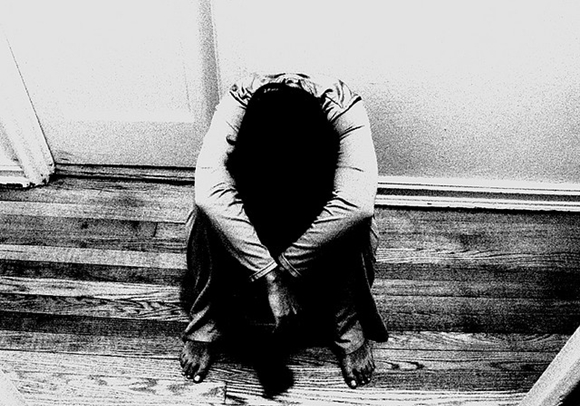
Just as shocking is that in the US military, active soldiers are now committing suicide at a rate of one soldier per day. More soldiers are dying from suicide now than from actual combat.
Politicians who like to preach that things aren't great but they are getting better need to keep in mind that they aren't.
Forget unemployment stats (which are rigged anyway, yet currently stand at 8.3 per cent), forget net worth statistics (which in the US show a 40 per cent drop in individual net worth since 2008), forget a broken stock market (which while going up is seeing company after company getting slaughtered, RIM, Zynga, Facebook, etc.)... forget all those 'metrics' which clearly show things are not getting better.
Just look at the suicide rate. Nothing measures the sense of 'hope and hopelessness' better than that. And in the UK we are seeing a massive rise.
In 2010 there were 5,608 suicides. If approximately 500 of them, according to the UK study, were above what would have occurred if we had not gone in to recession, that's nearly a 10 per cent rise suicides (which is insane in an industrialized nation where really there's no reason that anyone should feel as though they have to kill themselves given help is/should be available).
 |
| Jamie Dimon, CEO, JP Morgan Chase |
To make matters even worse, it's a commonly accepted epidemiological fact that for every person who successfully commits suicide there are 10-20 others who attempt and fail (or are saved before completion) - although some statistics rate the ratio of successful attempts to failed attempts at 1:33.
So while an addition 2,000 people in the UK have checked out, its safe to assume that 20,000-40,000 (and perhaps as high as 69,000) have attempted to do so but failed or were saved.
Point is, it's clear that things have not gotten better.
From a PR perspective, this is why populations around the world are losing faith in their leaders. Because while society is crumbling around the average Joe, the politicians continue to use 'optimistic' messaging.
Optimism is great, but telling someone who has been shot that it's nothing but a scratch is not optimistic, it's delusional, and the person who has been shot knows it.
Politicians should be talking more about the fact that the world is still in crisis and that we need to start tackling the situation as a crisis. Instead they find whatever piece of tiny good news they can and hang their messaging hat on that.

An 'ivory' tower approach to public relations, I've always felt, dooms you in the long run. An 'in the trenches' approach, I've always felt, while tougher, sets you up for success in the long run. Knowing what people are going through and addressing their real concerns is what good PR is about. Merely pumping messages that YOU think sound good, with the belief that if it sounds good to you it will sound good to others, is a bad messaging strategy.
My prediction is that many politicians are going to find themselves booted out of office over the coming years precisely because of an ivory tower approach to PR. Optimism is great when in the early stages of a crisis, but at a certain point, when things remain bad enough long enough, you have to 'get real' with your messaging or risk becoming severely disconnected with your audience.
The sad thing is, if politicians were more truthful about the extent of the crisis we are in, I believe it's possible that some of those people who killed themselves may have hung on. Being honest about things is what creates a sense of hope. Being disingenuous, if not out-right deceptive, actually adds to people's sense of 'hopelessness' because when their leaders aren't acknowledging their hardships, they begin to feel like there's no hope that things will get better if those responsible for fixing the problems don't acknowledge the extent of how bad the problems are.
So in my humble opinion, (bad) PR has played a role in those people's deaths, if only in contributing to their sense of hopelessness.
Comments
Post a Comment