As people who know me know, I've always been interested in stocks and macro-economics. Afterall, the stock market and economics are what structure our world. Every job, corporation and government is moving along within the current of what we call economics. That reality has a HUGE impact on public relations, creating macro-trends that influence messaging strategies.
You simply can't underestimate the importance economics play in our day-to-day lives.
Every empire that has fallen has fallen due to economics. Every war that has been waged has been paid for through economics. Every dictator stays in power through economics. Every revolution is fueled by economic variables. All innovation is tied to economic variables.
As such, many of my posts have been about the markets and various events unfolding therein. Mostly because much of the 'news' over the past three years has been political or tied to economics. As of today though this will be my last post relating to economics and the markets. Well, let me revise that, I'll be blogging a lot less about economics (I don't plan to blog at all about them, but you can never say never) and focusing more on PR as it applies to other areas of the world we live in.
 As many of you have seen the markets got rocked today after an already disasterous week. The markets were already knocked to their knees and today they continued to get pounded in to near unconciousness (dropping another four per cent in a single day - the worst one day loss since 2008).
 It's created a 'come to Jesus' moment for me and I've decided that's it, I'm getting out of the market. I've booked a slot with my bank tomorrow and will be liquidating all my equity investments. I might put my money in bonds although I'm even toying with just holding cash.
If you've read my Top 10 Reasons This Recession Will Never End you know that I've been worried about the long-term direction of the markets for a while now. I've held out hope though that the variables that I listed had the potential to strengthen over time. I'm now convinced that they will not. While I openly admit that I could be wrong and that in time things will get better (after all I'm no Alan Greenspan - that's a joke - Greenspan caused all this), I think the risk-reward paradigm is simpy way to dangerous.
So here in my final 'markets' post is a laundry list for why I think, long term, the markets will not return anything to common investors. I won't go in to long explanations for each of the items on this list, I'm simply providing it as a benchmark for what is driving my decision to exit the investment model for the next few years (and possibly forever).
 1. Obama has no clue what he is doing (seriously, this guy doesn't understand economics and he's surrounded himself with ex-Goldman Sachs guys, the same type of people who caused all this). At this point I think he's worse than Bush. At least Bush can say there was no precedent for him to evaluate what he did against - they took a risk and whoops, destroyed the economy. Obama though had a precedent (BUSH) and yet continues to do all things Bush did.
2. Politicians in general are too busy playing the 'blame game' to actually solve any problems
3. Unemployment hasn't budged in three years (and I think it will actually get worse in the coming years - up to 12-15% possibly in the US).
4. Business aren't hiring, they are staying lean and sitting on cash (that's not going to change), expect another round of lay-offs similar to what we saw in 2008 (Cisco has sacked 6,500, RIM recently sacked 2,000, HSBC sacked 30,000... expect others to follow).
5. Governments will start laying peopel off also (Environment Canada today announced it's reducing its staff by 10 per cent).I expect a wave of government lay-offs to happen at federal and municipal levels (especially in the US) as governments try to 'balance their budgets'.
6. Austerity (ie. belt tightening) is the new buzz word. That's right - reducing debt is the focus. Which normally isn't bad, but when your focus should be on job creation, it is. It basically means governments don't care about the number of poor people increasing, or the middle class shrinking, reducing their debt is the only focus. Even as the USA increasing its debt ceiling, it's at the same time trying to keep spending to a bare minimum.
7. Baby boomers are f**ked. The 2008 crash already extended (on average) the retirement age to 67. This lack of recovery will simply continue to add to this. Baby boomers on average will have to work beyond 67 years of age if they want to still eat and have a roof over their head.
8. As the number of poor increases no matter how lean companies have gotten, they will see profits fall further, creating an endless cycle of 'right sizing' to correlate with the improvished state of consumers. But the reality is you can only right-size so much before you simply have to accept lower profits for shareholders, which means your stock starts to tank.
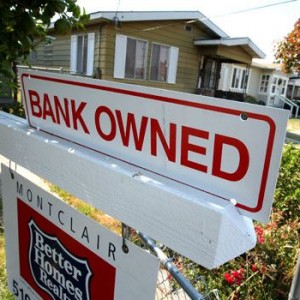
 9. Housing remains inflated. All it will take is another wave of lay-offs (which I think it's clear are coming) in conjunction with people's net equity dropping (due to the stock market) to cause another housing crash (this time I expect Canada will get hit as well).
10. On the housing front, another variable fast approaching is the possibility that a lot of baby boomers will sell their homes as a strategy to still attain retirement.
The only problem? This will cause a massive glut of supply and not enough demand. It wasn't a problem three years ago because most baby boomers weren't retiring (or selling). We are now entering that critical phase where they are now seeing that they are almost out of time to figure out how to retire off what they have (and the biggest asset they have that they can sell to achieve retirement is their house).
11. QE3 (quantitative easing) is on the way. Great, another round of government stimulus spending. It's like giving the patient their cancer treatment three years after they've been diagnosed. You quantitatively ease at the start of a recession, no three years in to one.
 12. China is the new America. That's right, read up on it, the young entrepreneurs in China are behaving the way American entrepreneurs use to.
13. Think India and China stealing manufacturing jobs was bad? Wait until they move in on the knowledge worker jobs - give it ten year and Wall Street may be headquartered in Bejing.
14. Extended recessions cause permanent damage. It's just like being sick. If you treat the illness immediately you probably recover fully with no lasting effects. If you let it linger for years before treating it, it creates permanent damage even after you address it and heal from it. Similarly, you can't have 9.2 per cent and higher unemployment for over three years and not suffer some form of long term damage. At the very least all those unemployed people have lost years of income and savings that they can never recoup (and trust me, that's the very least of the damage).
 15. A wave of fury is coming. People are disgusted. A recent CNN poll shows congress approval rating at an all-time low of 14 per cent. 77 per cent described politicians during the recent debt ceiling issue as behaving like "spoiled brats". The American people are reaching a boiling point that is going to erupt in the near future.
16. If you invested one dollar in the stock market in the year 2000, eleven years later it would now be worth one dollar and ten cents. But in reality, you've lost money when you consider the cost of many things has doubled (like gas for instance). You'd have been way better off investing that dollar in housing (even with the housing bubble bursting). So the question is simple, why would you want to invest in something that sucks at returning interest on your investment? So unless you want to be a day trader, one has to ask at this point, where's the logic in being invested in the stock market?
17. No one knows what they are talking about anymore. Seriously, this is very similar to 2008 when stocks started to crash. No one thought it could go down to 6,500. Every time it crashed people waited for the bounce, only for it to crash yet again.
 18. Algo trading. Algorithmic trading is what moves the markets. Basically a computer automatically manages most trades, which is why you get flash crashes and giant crashes that take place in just a single day. Once enough 'indicators' go negative, the system simple sell tons of stock and the market crashes. There's no human breaking mechanism anymore, which means if you are invested in a 'buy and hold' system (as most people are) you take the hit when the market crashes faster than you can react to it. Why would anyone stay in a system where they got overly punished every time there's a bump in the road? Much less, why would anyone stay in a system where computers are making the buy and sell decisions that move the markets?
19. If they (the government, the banks, industry captains, etc.) could fix things, they would have by now. People who think time heals all wounds could be wrong this time. If three years in to the recession we are worse off than when it started (unemployment unchanged, increased debt, worse political situation, etc.) then it becomes very difficult to argue that the people in power can fix things. Fool me once shame on you. Fool me twice, shame on me. Fool me for three years in a row - time for me to wake up to the fact that you are talking out your ass.
 20. Warfare Galore. Governments clearly like war. The USA has been at war now for over 10 years. Even a Great Recession can't pull them back from going to war endlessly. I thought Obama would bring the troops home, but he is worse than Bush. What this tells me is they have no intention of pulling the army back. Which means, continued world instability as wars rage on.
21. The 'profits' have been made. Name me one (large scale) industry that isn't tapped out - that hasn't maxed out its 'economy of scale' and manufacturing cost savings? There's no more easy growth to be had. Most industries are now dominated by 'too big to fail' corporations - which have maximized operational savings as much as they can. So how do you keep growing when you've gotten as big as you can get? The answer: you don't.
22. Innovation is becoming a dirty word. Just about every innovative technology that would revolutionize the world (solar power, voip, pharma, etc.) are either shunned because they are too expensive or they are intentionally strangled by large corporations that like the higher margins tied to existing products. No innovation = no increase in the stock market.
 23. The rich could potentially save us by why would they? Yes, 'job creators', otherwise known as the super rich, could go a long way towards saving the world (through entrepreneurship and investing in new up and coming businesses), but why would they at this point? I mean, why do they want the headaches and risk to their equity associated with trying to build new businesses in an environment as dysfunctional as the world is today? They can easily just take their money, go sit on the sidelines, and enjoy the rest of their life living in luxury. Hopefully they don't do this and there are still some hero-minded entrepreneurs out there, but at the moment it looks like most are simply sitting on the sidelines. Ralph Nader's new book - Only The Super Rich Can Save US - speaks to how important those with power and influence are to molding hte future (at least that's what I've heard, I haven't had a chance to read it yet)
24. Inflation / Hyper Inflation / Stagnation. What's interesting is that throughout this 'recession' we haven't see deflation kick in at any point. Despite the economy doing worse, the price of gas keeps going up (funny how the price seems decoupled from demand when it comes to gasoline). As gas goes up, the price of everything else goes up (as a result of increased transport costs). Combine this trend with a weakened currency and you've got the perfect recipe for hyper inflation (already the price of most bread products are 25 per cent higher than they were a year ago). As hyper inflation kicks in standard of living will begin to drop drastically (which ultimately erodes the middle class, which underpins the stock market with their 401ks, retirement investments and the creation of profits from the work they do within corporations).
There you have it. A laundry list of why, after 10 years of investing, I've decided I'm out (while I still have a half-tattered shirt on my back!).
Some may view my logic as overly pessemistic. Personally I think I've been overly hopefully for many years now. I've stayed in the markets through thick and thin and continued to believe that you had to invest, that it was the mature and responsible thing to do. I'm the last guy you'd ever think would walk away from investing.
At this point though, I see things the opposite way. Sure, I might be wrong and the markets might bounce up to 14,000 in a few years, yet from a risk-to-reward perspective, the odds seem heavily against this occuring.
And I have to think that if I have finally thrown in the towel when it comes to stocks, how many others out there like myself are on the verge of doing so also.
Back in 2008 amid the madness of the crash the view I expressed to others was that things will right themselves in time. The only caveat I added was that if unemployment did not start to get better within a couple years, then we truly were entering a 'new normal', one in which all the basic assumptions that we had hitherto assumed to be true would no longer be true.
I unfortunately have come to the conclusion that we have entered a 'new norm'. One in which the issues that have plagued us in the past will seem like Disneyland compared to what is coming.
I hope I'm wrong and that in a couple of years I'm actually kicking myself that I bailed out of the stock market. But I'd rather that be the case than watch my years of savings simply vanish before my eyes.
The old Kenny Rogers lyric seems most reflective of my views right now:
You got to know when to hold 'em, know when to fold 'em, Know when to walk away and know when to run.
It's time for me to run =)
You simply can't underestimate the importance economics play in our day-to-day lives.
Every empire that has fallen has fallen due to economics. Every war that has been waged has been paid for through economics. Every dictator stays in power through economics. Every revolution is fueled by economic variables. All innovation is tied to economic variables.
As such, many of my posts have been about the markets and various events unfolding therein. Mostly because much of the 'news' over the past three years has been political or tied to economics. As of today though this will be my last post relating to economics and the markets. Well, let me revise that, I'll be blogging a lot less about economics (I don't plan to blog at all about them, but you can never say never) and focusing more on PR as it applies to other areas of the world we live in.

 It's created a 'come to Jesus' moment for me and I've decided that's it, I'm getting out of the market. I've booked a slot with my bank tomorrow and will be liquidating all my equity investments. I might put my money in bonds although I'm even toying with just holding cash.
If you've read my Top 10 Reasons This Recession Will Never End you know that I've been worried about the long-term direction of the markets for a while now. I've held out hope though that the variables that I listed had the potential to strengthen over time. I'm now convinced that they will not. While I openly admit that I could be wrong and that in time things will get better (after all I'm no Alan Greenspan - that's a joke - Greenspan caused all this), I think the risk-reward paradigm is simpy way to dangerous.
So here in my final 'markets' post is a laundry list for why I think, long term, the markets will not return anything to common investors. I won't go in to long explanations for each of the items on this list, I'm simply providing it as a benchmark for what is driving my decision to exit the investment model for the next few years (and possibly forever).

2. Politicians in general are too busy playing the 'blame game' to actually solve any problems
3. Unemployment hasn't budged in three years (and I think it will actually get worse in the coming years - up to 12-15% possibly in the US).
4. Business aren't hiring, they are staying lean and sitting on cash (that's not going to change), expect another round of lay-offs similar to what we saw in 2008 (Cisco has sacked 6,500, RIM recently sacked 2,000, HSBC sacked 30,000... expect others to follow).
5. Governments will start laying peopel off also (Environment Canada today announced it's reducing its staff by 10 per cent).I expect a wave of government lay-offs to happen at federal and municipal levels (especially in the US) as governments try to 'balance their budgets'.
6. Austerity (ie. belt tightening) is the new buzz word. That's right - reducing debt is the focus. Which normally isn't bad, but when your focus should be on job creation, it is. It basically means governments don't care about the number of poor people increasing, or the middle class shrinking, reducing their debt is the only focus. Even as the USA increasing its debt ceiling, it's at the same time trying to keep spending to a bare minimum.
7. Baby boomers are f**ked. The 2008 crash already extended (on average) the retirement age to 67. This lack of recovery will simply continue to add to this. Baby boomers on average will have to work beyond 67 years of age if they want to still eat and have a roof over their head.
8. As the number of poor increases no matter how lean companies have gotten, they will see profits fall further, creating an endless cycle of 'right sizing' to correlate with the improvished state of consumers. But the reality is you can only right-size so much before you simply have to accept lower profits for shareholders, which means your stock starts to tank.
10. On the housing front, another variable fast approaching is the possibility that a lot of baby boomers will sell their homes as a strategy to still attain retirement.
The only problem? This will cause a massive glut of supply and not enough demand. It wasn't a problem three years ago because most baby boomers weren't retiring (or selling). We are now entering that critical phase where they are now seeing that they are almost out of time to figure out how to retire off what they have (and the biggest asset they have that they can sell to achieve retirement is their house).
11. QE3 (quantitative easing) is on the way. Great, another round of government stimulus spending. It's like giving the patient their cancer treatment three years after they've been diagnosed. You quantitatively ease at the start of a recession, no three years in to one.

13. Think India and China stealing manufacturing jobs was bad? Wait until they move in on the knowledge worker jobs - give it ten year and Wall Street may be headquartered in Bejing.
14. Extended recessions cause permanent damage. It's just like being sick. If you treat the illness immediately you probably recover fully with no lasting effects. If you let it linger for years before treating it, it creates permanent damage even after you address it and heal from it. Similarly, you can't have 9.2 per cent and higher unemployment for over three years and not suffer some form of long term damage. At the very least all those unemployed people have lost years of income and savings that they can never recoup (and trust me, that's the very least of the damage).

16. If you invested one dollar in the stock market in the year 2000, eleven years later it would now be worth one dollar and ten cents. But in reality, you've lost money when you consider the cost of many things has doubled (like gas for instance). You'd have been way better off investing that dollar in housing (even with the housing bubble bursting). So the question is simple, why would you want to invest in something that sucks at returning interest on your investment? So unless you want to be a day trader, one has to ask at this point, where's the logic in being invested in the stock market?
17. No one knows what they are talking about anymore. Seriously, this is very similar to 2008 when stocks started to crash. No one thought it could go down to 6,500. Every time it crashed people waited for the bounce, only for it to crash yet again.

19. If they (the government, the banks, industry captains, etc.) could fix things, they would have by now. People who think time heals all wounds could be wrong this time. If three years in to the recession we are worse off than when it started (unemployment unchanged, increased debt, worse political situation, etc.) then it becomes very difficult to argue that the people in power can fix things. Fool me once shame on you. Fool me twice, shame on me. Fool me for three years in a row - time for me to wake up to the fact that you are talking out your ass.

21. The 'profits' have been made. Name me one (large scale) industry that isn't tapped out - that hasn't maxed out its 'economy of scale' and manufacturing cost savings? There's no more easy growth to be had. Most industries are now dominated by 'too big to fail' corporations - which have maximized operational savings as much as they can. So how do you keep growing when you've gotten as big as you can get? The answer: you don't.
22. Innovation is becoming a dirty word. Just about every innovative technology that would revolutionize the world (solar power, voip, pharma, etc.) are either shunned because they are too expensive or they are intentionally strangled by large corporations that like the higher margins tied to existing products. No innovation = no increase in the stock market.

24. Inflation / Hyper Inflation / Stagnation. What's interesting is that throughout this 'recession' we haven't see deflation kick in at any point. Despite the economy doing worse, the price of gas keeps going up (funny how the price seems decoupled from demand when it comes to gasoline). As gas goes up, the price of everything else goes up (as a result of increased transport costs). Combine this trend with a weakened currency and you've got the perfect recipe for hyper inflation (already the price of most bread products are 25 per cent higher than they were a year ago). As hyper inflation kicks in standard of living will begin to drop drastically (which ultimately erodes the middle class, which underpins the stock market with their 401ks, retirement investments and the creation of profits from the work they do within corporations).
There you have it. A laundry list of why, after 10 years of investing, I've decided I'm out (while I still have a half-tattered shirt on my back!).
Some may view my logic as overly pessemistic. Personally I think I've been overly hopefully for many years now. I've stayed in the markets through thick and thin and continued to believe that you had to invest, that it was the mature and responsible thing to do. I'm the last guy you'd ever think would walk away from investing.
At this point though, I see things the opposite way. Sure, I might be wrong and the markets might bounce up to 14,000 in a few years, yet from a risk-to-reward perspective, the odds seem heavily against this occuring.
And I have to think that if I have finally thrown in the towel when it comes to stocks, how many others out there like myself are on the verge of doing so also.
Back in 2008 amid the madness of the crash the view I expressed to others was that things will right themselves in time. The only caveat I added was that if unemployment did not start to get better within a couple years, then we truly were entering a 'new normal', one in which all the basic assumptions that we had hitherto assumed to be true would no longer be true.
I unfortunately have come to the conclusion that we have entered a 'new norm'. One in which the issues that have plagued us in the past will seem like Disneyland compared to what is coming.
I hope I'm wrong and that in a couple of years I'm actually kicking myself that I bailed out of the stock market. But I'd rather that be the case than watch my years of savings simply vanish before my eyes.
The old Kenny Rogers lyric seems most reflective of my views right now:
You got to know when to hold 'em, know when to fold 'em, Know when to walk away and know when to run.
It's time for me to run =)
Comments
Post a Comment